Independent glass grinder comparisons
Match the grinder
to the glass.
Detailed comparisons of stained-glass grinders, flat laps, slant laps, wet belt sanders and cabbing grinder-polishers—labelled by the work each machine actually does.
Interactive workshop desk
Choose it. Set it up. Keep it working.
Six practical tools built from the exact-model catalog and clearly labelled planning assumptions. Your comparison list is saved on this device.
Grinder recommendation quiz
Choose “All jobs” or “All bench sizes” when you do not want those answers to limit the results.
Recommended machine family
All grinder types
Because you selected all jobs, these choices cover pattern fitting, flat-face polishing, long edges and contoured work across the main machine families.


Glass grinder comparison finder
Compare every grinder by machine type.
Start with all grinders, then narrow to stained-glass bit grinders, horizontal flat laps, slant laps, wet belt sanders or multi-wheel cabbing machines. Cutters and soldering tools remain available as secondary workshop categories.
23 machines and tools found

Grinders
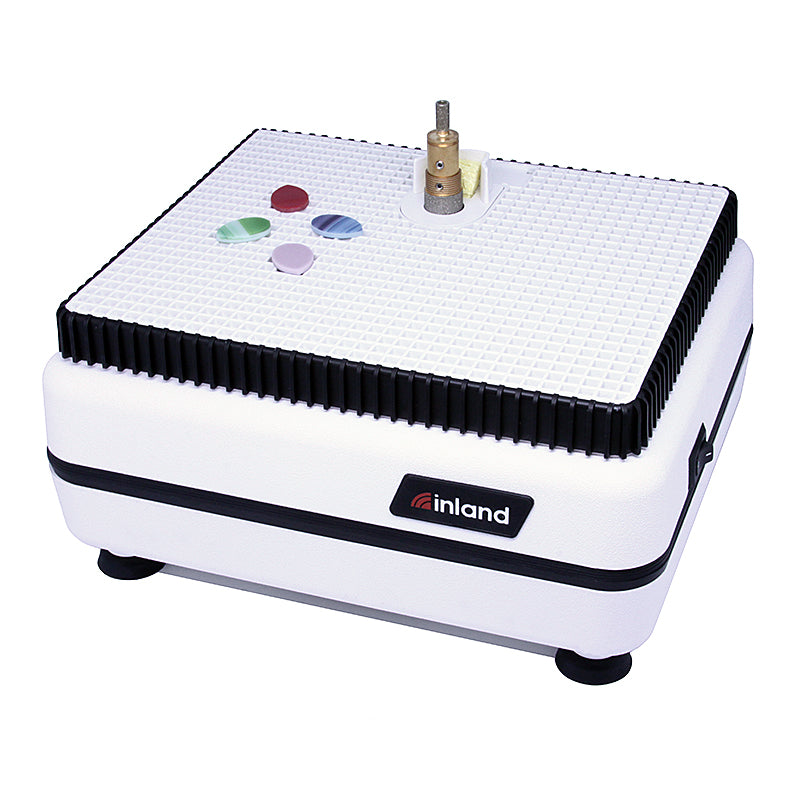
Inland Craft WizCG Glass Grinder
Best all-round studio grinder
A proven two-bit grinder for hobbyists who want useful torque without a large professional machine.

Flat lap grinders
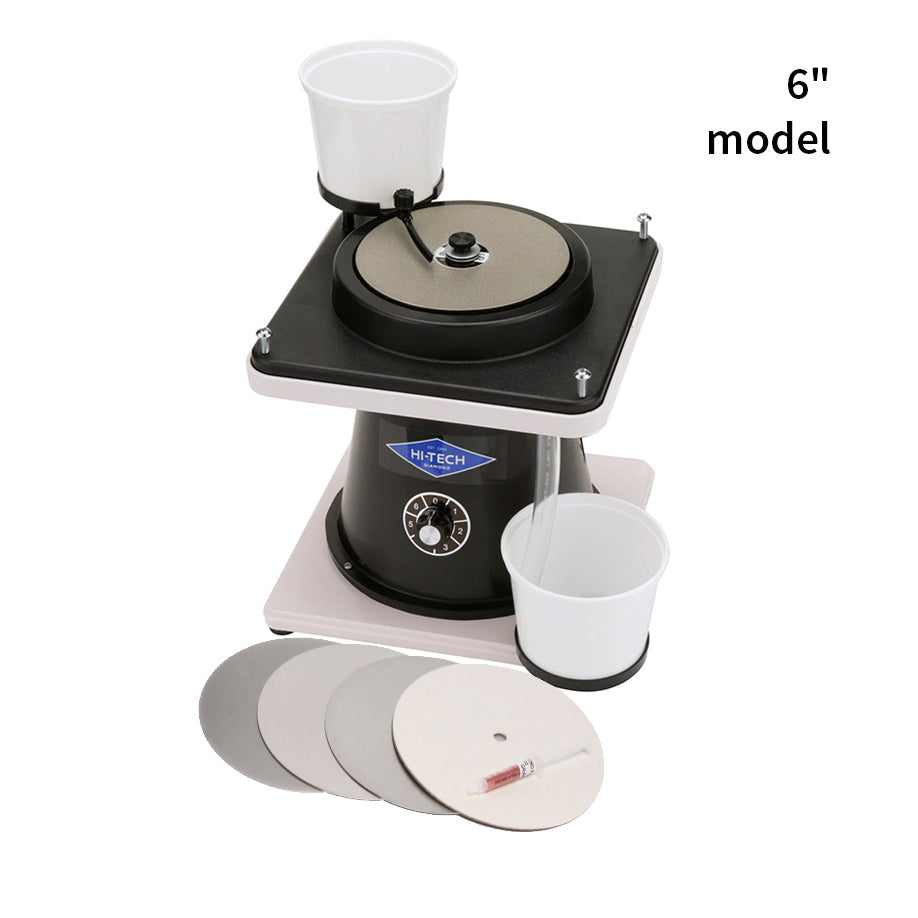
Hi-Tech Diamond 6-Inch All-U-Need Glass Kit
Compact glass grinding and multi-stage polishing
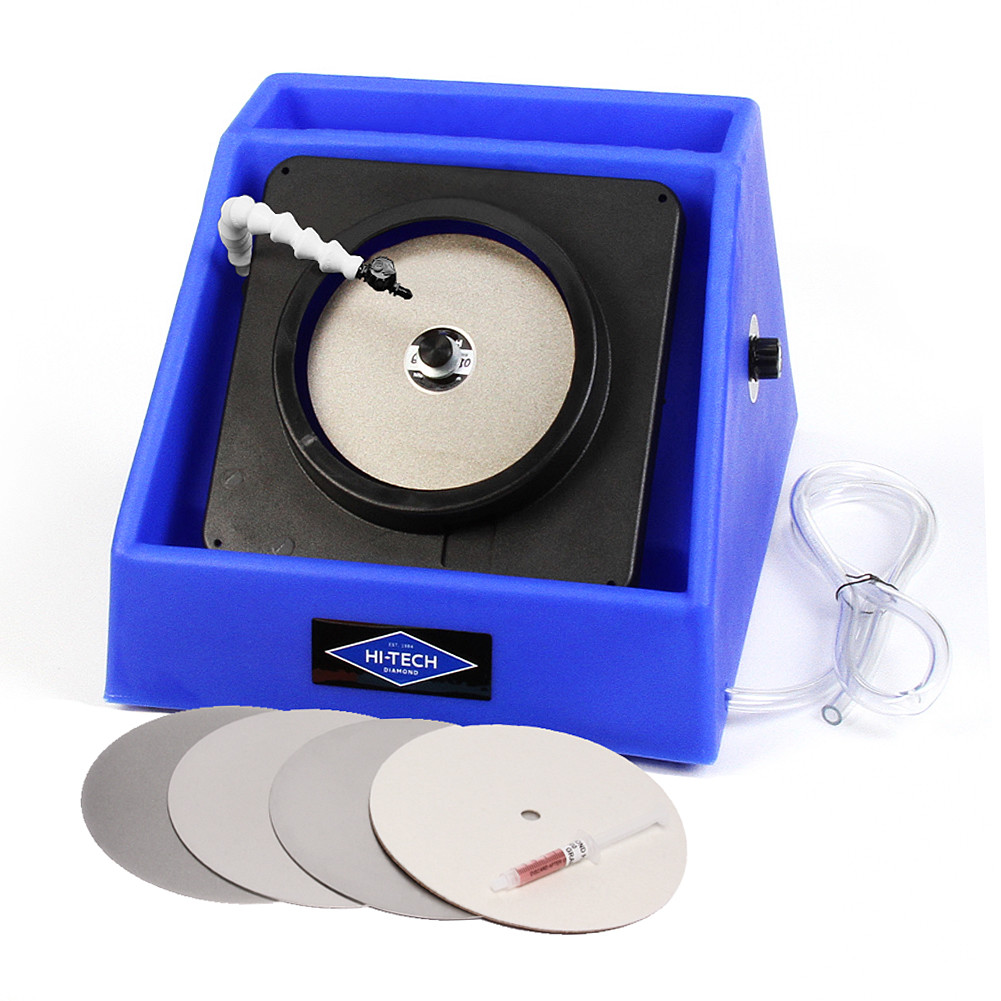
A glass-specific flat-lap package with variable speed and four diamond-disc stages for shaping, smoothing and polishing.

Slant lap grinders
Hi-Tech Diamond 6-Inch Slant Cabber — Glass Kit
Better visibility while grinding glass and crystal
A glass-specific slanted flat lap that brings the contact point toward the user and includes a fine 360-to-3,000-grit progression.

Wet belt sanders
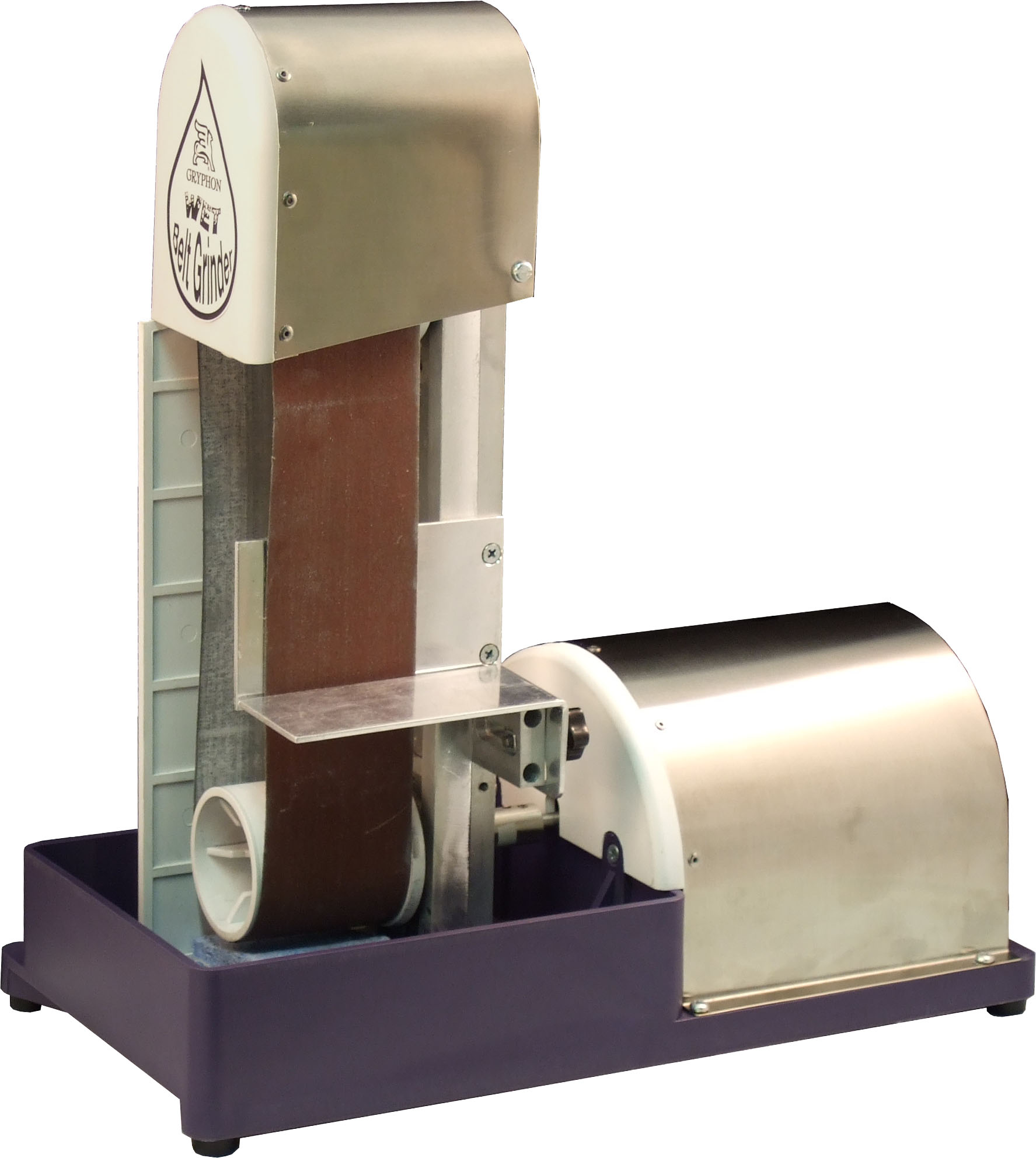
Gryphon Wet Belt Sander
Long straight edges, bevels and fused glass
A purpose-built 3-inch wet belt machine with a tilting support platform and three included grits for shaping through smoothing.

Lapidary grinder polishers
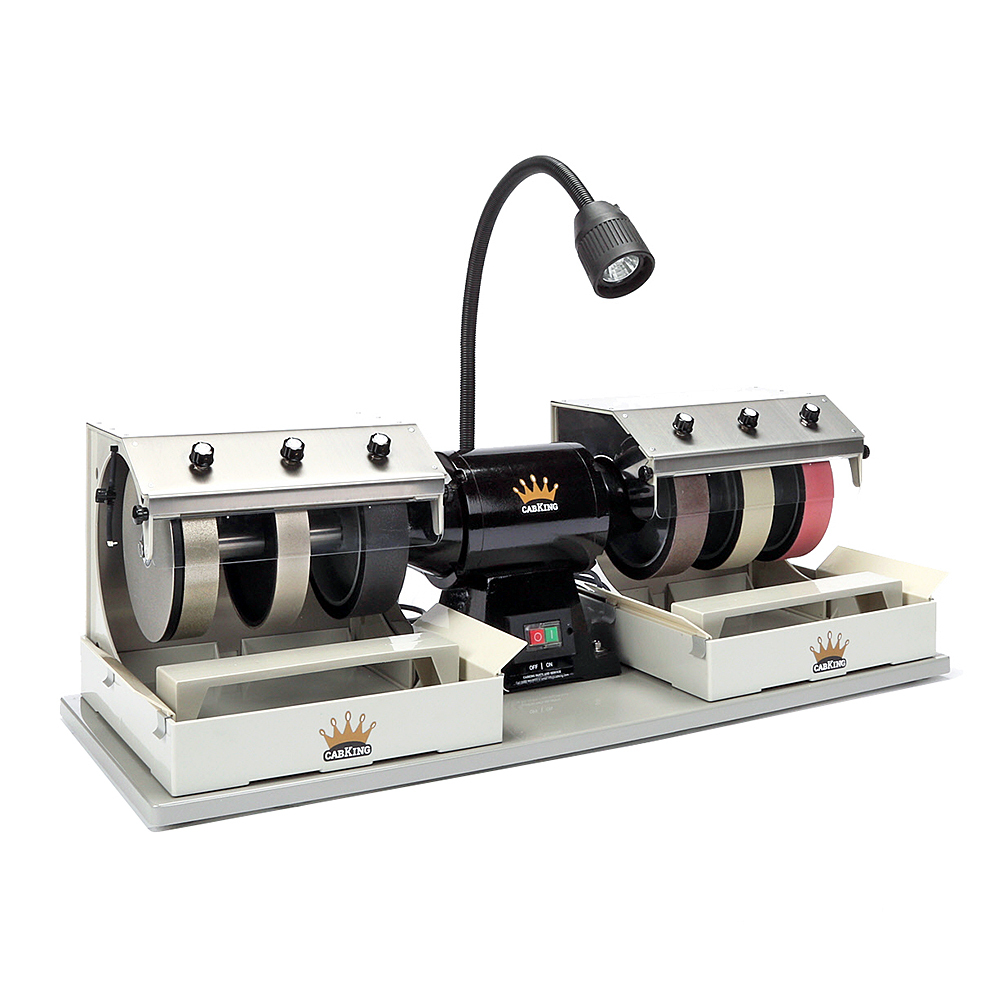
CabKing 6-Inch Cabbing Machine
Complete wheel-by-wheel lapidary workflow
A six-wheel grinder-polisher with direct-drive power, water delivery, lighting and a complete progression for cabochons and shaped glass.

Lapidary grinder polishers
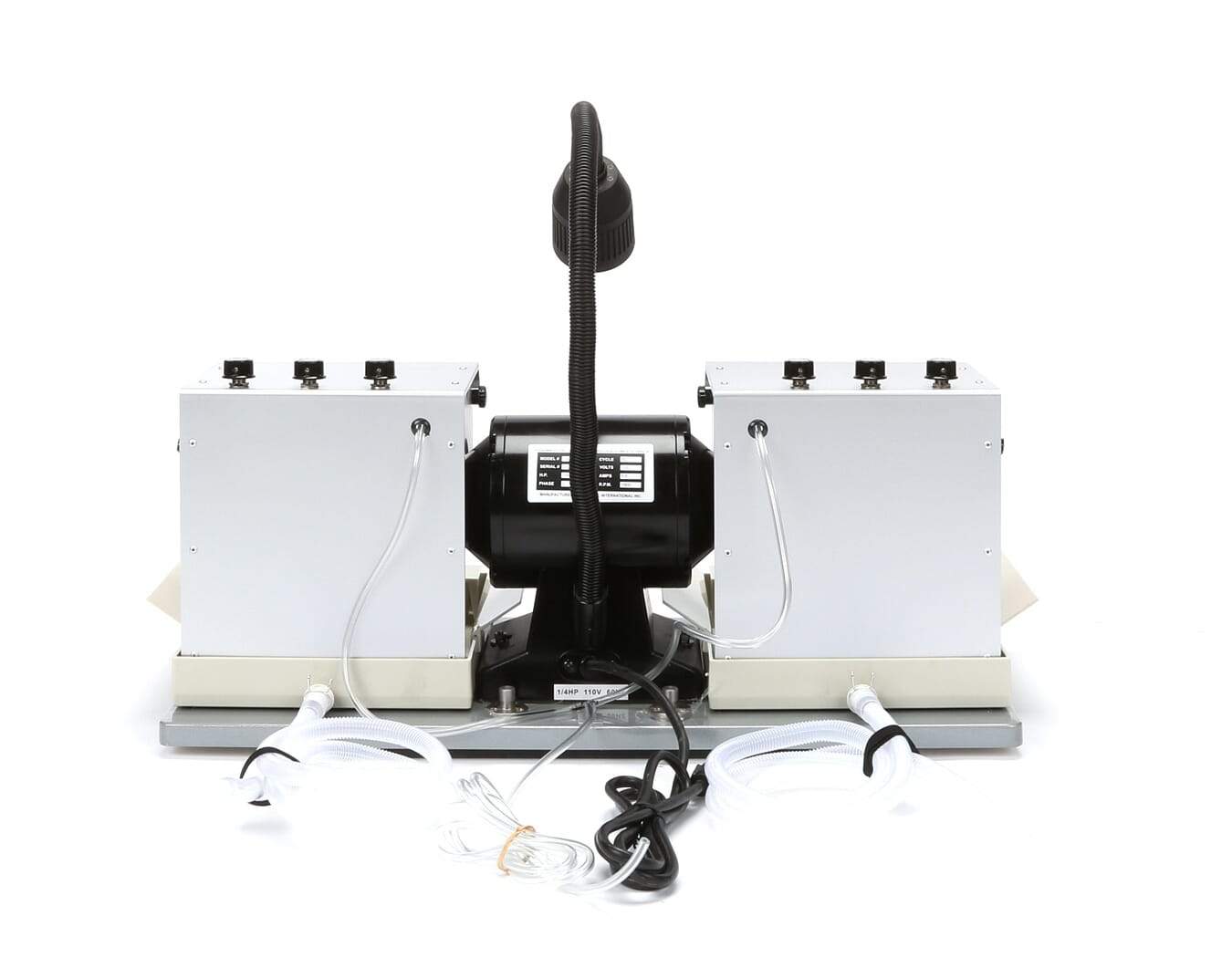
VEVOR 6-Inch Cabbing Machine
A lower-cost entry to a complete six-wheel cabbing station
A six-wheel 110-volt grinder-polisher with independent water feeds, lighting and an end lap; capable on paper, but less proven than CabKing.

Grinders
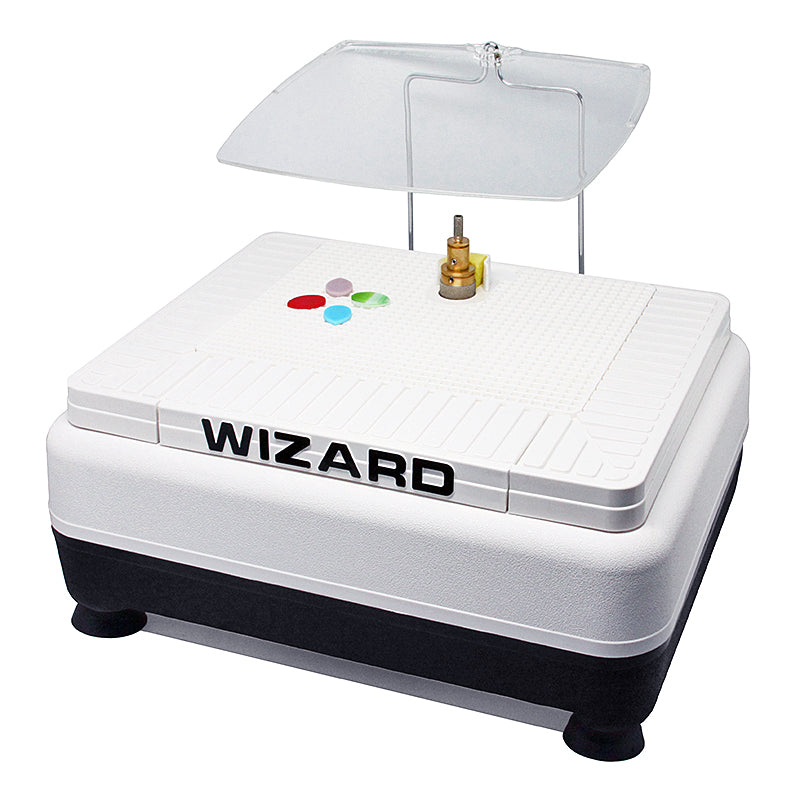
Inland Craft Wizard IV Glass Grinder
Large panels and regular studio work
Its larger work surface makes this a sensible step up for makers who grind often.

Grinders
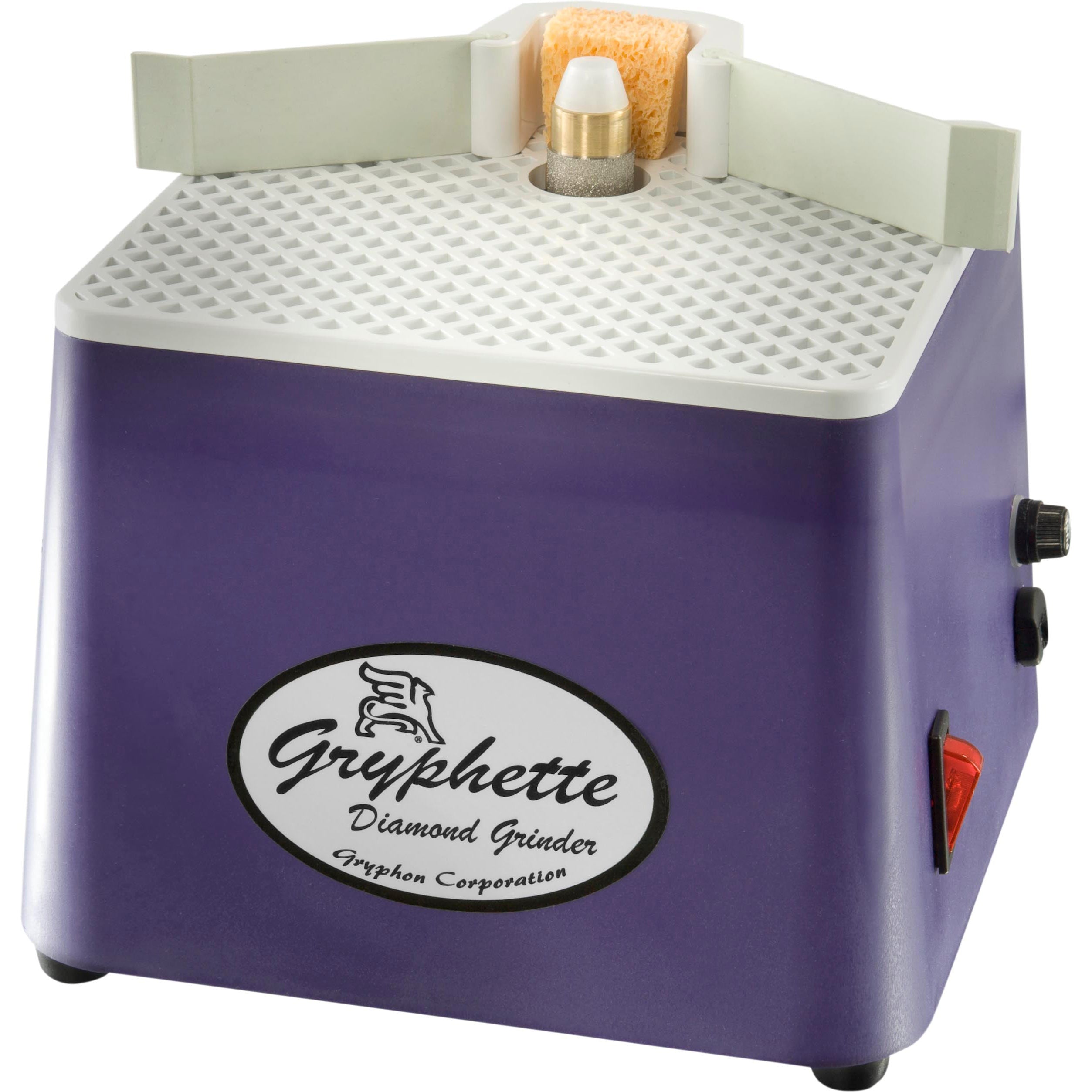
Gryphon Gryphette Glass Grinder
Compact beginner benches
Small and straightforward, the Gryphette suits occasional projects and tighter workspaces.
Five machine families
The right grinder depends on the surface.
These names are often mixed together in listings. This comparison keeps them separate so you can match the machine to the geometry and finish you actually need.
Tight inside curves, pattern fitting and foil-ready edges.
Flat faces, straight edges and staged polishing.
The same disc workflow with a clearer view of the contact point.
Long edges, broad outside curves and repeatable bevels.
Fast rough-to-polish progression on contoured glass and stone.
Editor’s stained-glass shortlist
Four strong choices, each for a different bench.
Instead of making you scan nine near-identical cards, we start with the four clearest use cases. The full comparison remains available when you want every specification.

Best overall
Inland Craft WizCG Glass Grinder
A proven two-bit grinder for hobbyists who want useful torque without a large professional machine.
- 30 oz-in torque
- 3/4 in and 1/4 in 100-grit bits
- 115 V US model

Best value
Inland Craft WizlingCG Glass Grinder
A true wet stained-glass grinder with a broad table and a simple one-bit starter bundle.
- 16 oz-in torque
- 3,500 RPM
- 3/4 in 100-grit bit

Best compact
Gryphon Gryphette Glass Grinder
Small and straightforward, the Gryphette suits occasional projects and tighter workspaces.
- Compact footprint
- 3/4 in grinding bit
- Direct-drive motor

Best premium
Techniglass THE GRINDER 1
The most powerful and fully equipped Techniglass option, with 57 oz-in torque, a broad table, illuminated shield and universal voltage.
- 4,500 RPM brushless motor
- 57 oz-in torque
- 110–220 V
How we choose: exact model, cooling, support, bit access, voltage and realistic ownership—not the largest motor or highest commission.
Compare all 9 grinders →Grinding beyond stained glass
Choose by the shape you need to finish.
A grinder bit fits pattern pieces. A flat lap controls flat faces. A wet belt supports long edges. A cabbing machine keeps a full grit progression ready. This is the distinction most buying pages skip.
Best flat lap for glassFlat lap grinders
Hi-Tech Diamond 6-Inch All-U-Need Glass Kit
Compact glass grinding and multi-stage polishing
This glass-specific All-U-Need bundle is the most relevant flat lap for makers moving beyond foil-ready edges. The horizontal disc supports flat faces and straight edges while the supplied grit sequence moves from correction toward a polished result.
- 6 in flat lap
- 800–3,400 RPM
- 1/4 hp motor
Best for long edgesWet belt sanders
Gryphon Wet Belt Sander
Long straight edges, bevels and fused glass
The Gryphon is the clearest bridge between a stained-glass grinder and larger coldworking equipment. Its broad moving belt is better suited to long straight edges, truing larger curves and introducing a controlled bevel than a small vertical grinder bit.
- 3 × 30 in belt
- 90 sq in grinding surface
- 3,500 RPM listed
Best complete stationLapidary grinder polishers
CabKing 6-Inch Cabbing Machine
Complete wheel-by-wheel lapidary workflow
The CabKing 6 is a production-style step up from a flat lap. Six wheels remain mounted, so the operator can move from shaping through successive smoothing stages without changing a disc for every grit.
- Six 6 in wheels
- 1/4 hp motor
- 1,800 RPM
All 14 specialist machines
See every researched option
Compare horizontal laps, slant laps, the Gryphon wet belt sander and six-wheel CabKing and VEVOR stations by exact model.

The bench sequence
Choose tools that work together.
- ScoreMatch cutter grip and wheel to your hand and glass.
- Break & shapeUse the right jaw profile before asking a grinder to fix everything.
- FoilWidth, backing and burnishing determine the solder line.
- SolderHeat recovery and tip size matter more than headline wattage alone.
Practical workshop library
Guides for the searches makers actually make.
Commercial comparisons sit beside setup and maintenance answers, so the site remains useful after the purchase.
Best stained glass grinders: torque, table size and bit access compared
A shortlist for beginners, regular hobbyists and larger studio work.
Read guide →Low-KD opportunityBest grinder for stained glass edges: what makes a cleaner fit
How bit grit, cooling and work support affect foil-ready edges.
Read guide →GrindersGlass grinder for stained glass: setup and maintenance guide
From sponge placement to bit height, the details that keep grinding consistent.
Read guide →Starter toolsStained glass tools for beginners: a useful kit without filler
The cutters, pliers, foiling tools and safety gear worth buying first.
Read guide →CuttingGlass cutting tools explained: cutters, pliers and guided systems
Choose tools by the cuts your patterns actually require.
Read guide →Grinder typesTypes of glass grinders compared: bit grinders, flat laps, belts and cabbing machines
A geometry-first guide to the right wet grinder or polisher for curves, edges, faces and cabochons.
Read guide →Flat lap comparisonFlat lap vs slant cabber: which glass polishing machine fits your work?
Compare visibility, work support, spray, disc sizes and grit changes before choosing a horizontal or angled lap.
Read guide →Cabbing machinesBest budget cabbing machine: VEVOR vs CabKing 6
Where the lower purchase price helps—and where support, wheels, setup and owner feedback change the value calculation.
Read guide →CuttingPistol-grip vs pencil glass cutter: which suits you?
A grip-by-grip comparison for straight lines, curves and hand comfort.
Read guide →SolderingChoosing a stained glass soldering iron: wattage, tips and recovery
Why electronics irons and stained-glass irons behave differently.
Read guide →ComparisonHakko FX-601 vs Weller W100PG for stained glass
Dial control or regulating tips: two proven approaches compared.
Read guide →FoilingCopper foil width guide for stained glass
Match foil width and backing color to glass thickness and finish.
Read guide →MaintenanceStained glass grinder bits: size, grit and replacement signs
Know when to reposition, dress or replace a diamond bit.
Read guide →WorkshopA safer stained glass workbench setup for small spaces
Separate cutting, wet grinding and soldering efficiently.
Read guide →CareHow to clean flux residue from stained glass
A careful post-solder routine that protects the finish.
Read guide →ComparisonStained glass grinder comparison: 9 real machines compared
Compare nine true wet glass grinders by table support, cooling, bit system, voltage and studio fit.
Read guide →Beginner grinderBest stained glass grinder for beginners: 4 sensible choices
Entry-level glass grinders compared without confusing rotary tools, bits or cutters with the machine itself.
Read guide →ColdworkingBest flat lap machine for glass: 6-inch vs 8-inch models
Compare flat-lap size, speed, disc progression and water management for glass grinding and polishing.
Read guide →ColdworkingBest wet belt sander for glass edges and bevels
When a wet belt handles straight edges, broad curves and fused-glass work better than a grinder bit.
Read guide →LapidaryCan you use a lapidary grinder for glass?
Flat laps and cabbing machines compared for glass, crystal, sea glass and mixed-media work.
Read guide →ComparisonGlass grinder vs flat lap: which machine fits your work?
A practical comparison of pattern fitting, flat faces, edge polishing, cost and bench space.
Read guide →Fused glassBest grinder for fused glass and kiln-work corrections
Choose between a stained-glass grinder, wet belt sander and flat lap for fused-glass edges.
Read guide →MosaicsBest grinder for glass mosaics and small pieces
Bits, work support and fine-edge control for tesserae, curves and detailed mosaic work.
Read guide →Semrush opportunityGlass polishing machine guide: flat laps, belts and wheels
Choose the right glass polishing machine for flat faces, long edges, bevels, cabochons and coldworked forms.
Read guide →Semrush opportunityBest cabbing machine for glass and lapidary work
Compare six-inch and eight-inch cabbing stations, wheel progressions, water systems and ownership costs.
Read guide →ComparisonCabKing 6 vs CabKing 8: which cabbing machine fits?
A practical capacity, motor, wheel, space and value comparison for home and professional lapidary benches.
Read guide →ComparisonSlant cabber vs flat lap: visibility, control and finish
How working angle, disc size, spray direction and posture change the coldworking experience.
Read guide →Commercial guideBest glass edge polishing machine for studio work
Compare grinder bits, wet belts and flat laps for smoothing, beveling and polishing different glass edges.
Read guide →Why trust Glass Grind Lab
Useful evidence, without invented hands-on claims.
Our research desk checks exact model numbers against manufacturer pages, manuals and established specialist suppliers; separates measured specifications from editorial judgement; records when sources were checked; and explains when another model makes more sense. We do not copy Amazon reviews, invent star scores or claim personal testing that did not happen. Prices, sellers and bundles change, so Amazon remains the source for live purchasing information.